Research and development teams in manufacturing are often asked to explain work that is still changing. A prototype may look unfinished, a test may be difficult to reproduce outside the lab, and the most important knowledge may sit with one engineer who has been close to the project from the beginning. Manufacturing video gives R&D teams a practical way to make that progress visible without pretending that a concept is further along than it really is.
The most useful production approach is not a glossy product advert. It is a clear visual record of the problem, the thinking, the testing and the next decision. When the right detail is captured, video can help technical leaders align internally, help commercial colleagues understand what is genuinely differentiated and help prospective customers see the discipline behind an emerging solution.
Make the development journey easier to understand
R&D work rarely follows a neat sequence. Components are revised, test conditions change and promising ideas are sometimes rejected for good reasons. A well-planned film can turn that complexity into a sequence that viewers can follow: the original requirement, the design response, the test environment, the evidence gathered and the decision that follows.
This is especially valuable when different teams use different definitions of progress. A technical specialist may focus on tolerances or material performance, while a director needs to understand risk, timing and investment. Showing the actual work helps bridge that gap. It also supports the wider discipline of aligning technical teams around one clear story, so that the same project is not described five different ways in five different meetings.
Capture evidence rather than just activity
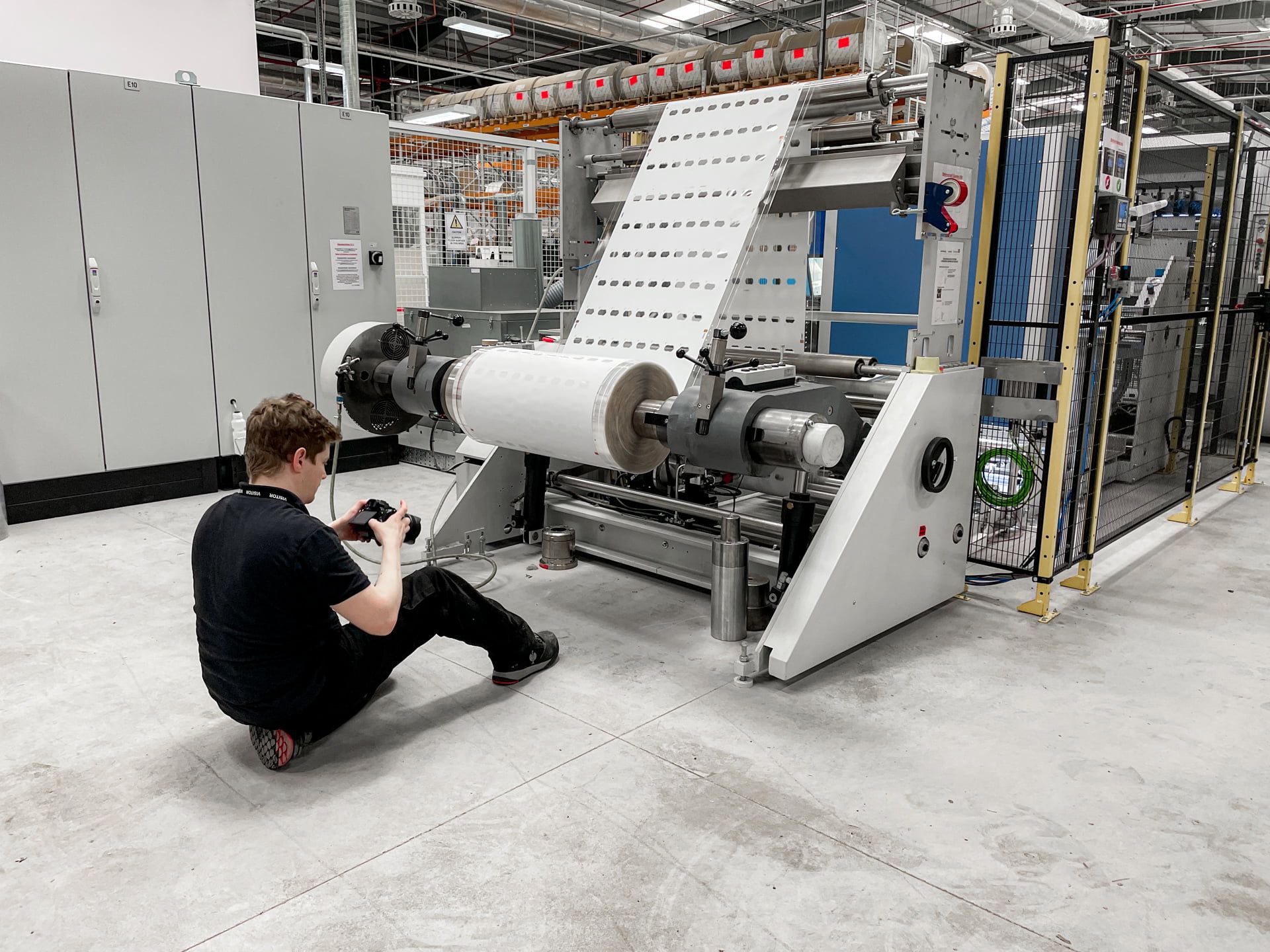
Footage of people working around a prototype can be engaging, but activity alone does not prove capability. The camera should be directed towards evidence: a measurement being taken, a material being handled, a machine being calibrated, a failure being investigated or a revised component being compared with its predecessor. These moments give the audience something concrete to understand and remember.
Interviews add context when they are built around precise prompts. Instead of asking an engineer to describe the whole project, ask what changed, what the team learned, which constraint mattered most and what the next test will decide. Short, specific answers can be edited alongside close-ups, screen captures and process footage, creating a film that feels authoritative without becoming inaccessible.
Give commercial teams a credible story to use
R&D video becomes commercially useful when it answers the questions that customers and partners are likely to ask. What problem does the development address? Where has the team tested it? What is already proven, and what is still being validated? What would implementation involve? Honest answers build more confidence than broad claims because they show that the organisation understands its own evidence and limitations.
A concise development film can also support the buying process before a formal presentation. It gives sales and marketing colleagues a shared reference point, while helping technical buyers arrive with better questions. That makes it a natural companion to process footage that helps manufacturing buyers ask better questions, particularly when the product or capability cannot be understood from a brochure alone.
Protect sensitive information while showing real progress
Prototype filming needs a clear information plan before cameras enter the site. Teams should identify confidential drawings, restricted screens, customer-specific details and anything that reveals an unannounced launch. A shot list can then prioritise safe angles, controlled demonstrations and details that explain performance without exposing intellectual property.
That planning does not have to make the film feel generic. Texture, sound, movement and carefully chosen detail can communicate the seriousness of the work while protecting what must remain private. It is also worth agreeing who can approve technical wording, because a small change in terminology can alter the meaning of a claim.
Build an asset that stays useful after the prototype changes
The strongest R&D productions are planned as a set of useful assets rather than one finished film. A main edit can explain the development story, while shorter cuts can focus on a test, a material, a manufacturing challenge or a lesson learned. Still frames and short sequences can support presentations, project updates, recruitment and future case studies.
It is sensible to record the date, version and status of every filmed stage. That makes future editing safer and prevents an old prototype from being presented as current capability. With a clear review process, manufacturing video can become a durable record of how an idea moved towards production, not just a moment of activity captured for a single campaign.
For R&D leaders, the opportunity is straightforward: make the evidence visible early, explain uncertainty with confidence and give every audience the level of detail it needs. When the story is grounded in real testing and real decisions, video helps a developing technology earn attention without overpromising. It turns progress into something colleagues, customers and partners can see, discuss and trust—much like the wider role of process-led manufacturing video production in building buyer confidence.