Changeovers are often treated as a necessary pause between productive runs, but the real cost is usually hidden in the variation around the pause. One team completes the reset in forty minutes while another takes an hour. A familiar machine behaves differently after a tooling change. A small adjustment is remembered by one experienced operator but never reaches the next shift. These gaps add up as lost capacity, rushed checks and avoidable frustration.
Manufacturing video gives changeover teams a practical way to study that variation and turn the best available method into a shared operating reference. Instead of relying on a written checklist alone, a well-planned film can show the order of work, the points where safety matters, the tools that need to be prepared and the visual cues that confirm a machine is ready to restart.
Make the real changeover visible
The first benefit is accuracy. A process map may say that a line is cleaned, reconfigured and checked, but it cannot always explain what those steps look like at the point of use. Video captures the hand positions, access points, staging decisions and small movements that determine whether a sequence flows or stalls. It can also reveal waiting: an operator searching for a tool, a component arriving late or a quality check being repeated because the result is unclear.
That visibility is especially valuable when a changeover crosses departmental boundaries. Production, maintenance, quality and stores may each own part of the sequence, yet the delay often occurs between those parts. A concise film can show the hand-off from one role to the next and make the expected condition explicit. The result is a shared conversation about the work, rather than four separate assumptions about it.
For teams already building stronger maintenance reliability practices, changeover footage can extend the same discipline into planned production interruptions. The focus is not on creating a cinematic record. It is on making the critical sequence easy to understand, review and improve.
Turn the best sequence into a repeatable standard
Once a changeover has been observed, the footage can support a more useful standard work document. The video should not replace the formal procedure, risk assessment or isolation requirements. It should reinforce them by showing the practical rhythm of the task. Short chapters can identify preparation, isolation, removal, installation, verification and restart. Captions can call out torque checks, cleanliness requirements, first-off inspections or the moment when responsibility moves to another role.
This approach also helps separate essential work from inherited habit. Teams often carry extra movements because “that is how it has always been done”. Reviewing the footage with operators and engineers allows each step to be tested against safety, quality and output. Some steps will be protected because they control risk. Others may be simplified, moved earlier or prepared offline. The final standard is therefore based on observed work and team knowledge, not on an idealised office description.
A strong visual standard is also easier to use when people are learning a new product family or covering another shift. That supports the wider goal of turning tacit process knowledge into repeatable standards without asking experienced operators to explain the same detail from scratch every time.
Use review footage to improve the next changeover
The most valuable video work continues after the first edit. Teams can record a representative changeover, compare it with the agreed standard and identify where reality still diverges. A short review may show that parts are staged in the wrong order, that a guard is difficult to access or that the final verification is happening too late. Those findings can feed a focused improvement action rather than becoming a general complaint about lost time.
It is useful to measure more than the headline duration. Track preparation time, equipment waiting, tool searches, adjustment loops, first-off approval and the number of people required at each stage. When the footage is paired with those observations, the team can distinguish a genuine method improvement from a change that simply moves delay to another part of the process. That makes the conversation more credible with operations leaders and easier to sustain on the shop floor.
Changeover films can also support daily briefings. A supervisor can show one specific moment, ask what makes it safe and repeatable, then capture a small improvement suggestion from the people doing the work. This creates a practical feedback loop similar to the approach used when shift teams turn practical lessons into consistent output.
Plan a useful manufacturing video project
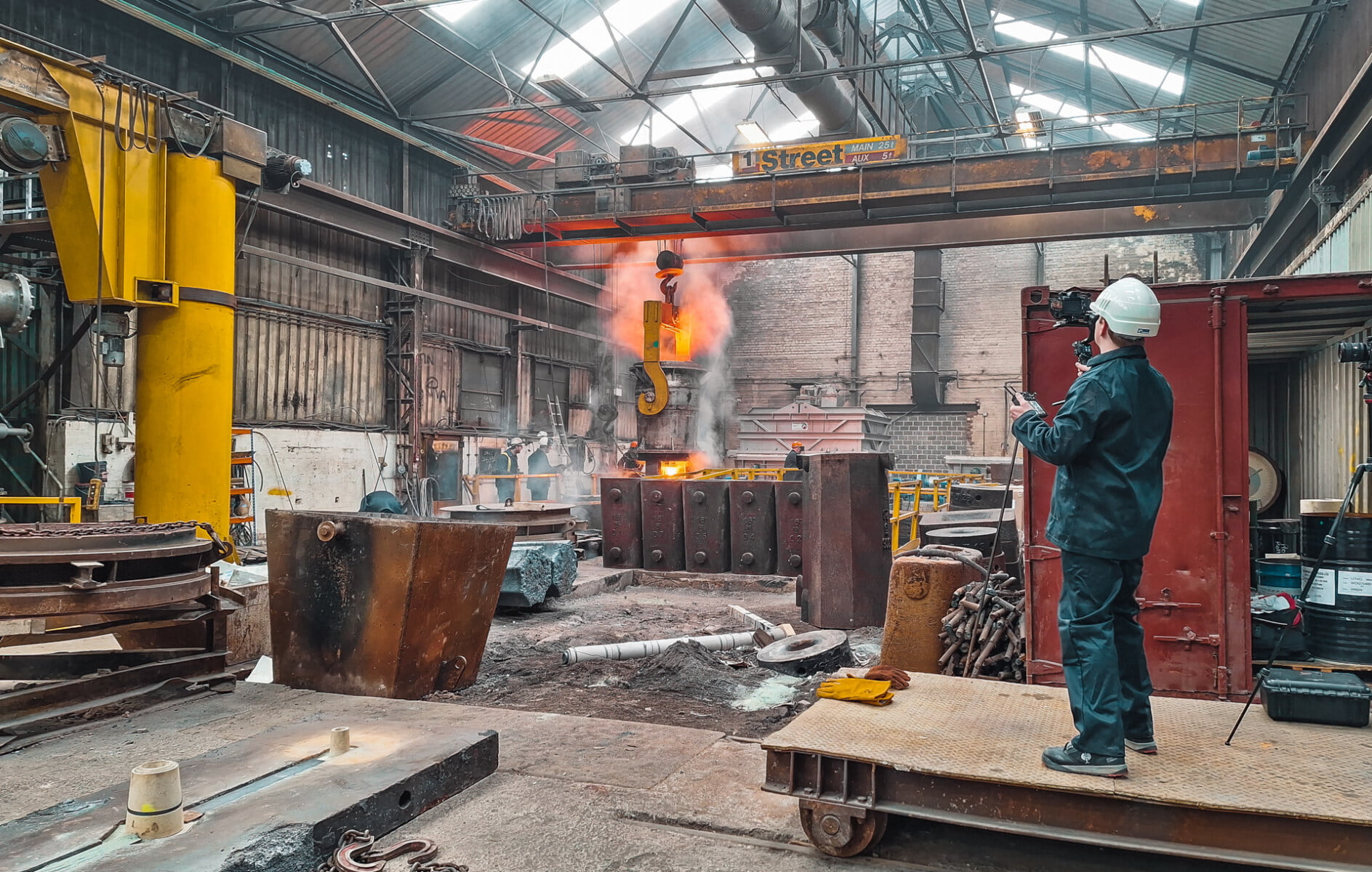
Start with one changeover that is frequent, costly or visibly inconsistent. Agree the purpose before filming: reduce preparation time, improve first-off quality, shorten training or make a safety-critical sequence clearer. Involve the operators who perform the work, protect confidential information and confirm filming boundaries around people, products and customer data. The best footage is usually calm, well-lit and close enough to show the decision points without creating an obstruction.
After filming, keep the first version practical. Use a clear title, a short introduction, labelled stages and a defined owner for future review. Store the approved version where the relevant teams can find it, and set a review trigger for a tooling change, product change, incident, audit finding or process improvement. With that governance in place, manufacturing video becomes part of changeover control rather than a one-off communications asset.
When teams can see the work as it happens, they can agree what should be protected, what can be improved and what good looks like. That shared view is often the first step towards shorter, safer and more predictable changeovers.